OCS Assignments System
Students are extending the OCS assignment lifecycle from creation through submission, analytics, and grading. The system supports inserting rubrics directly into assignments, providing immediate AI evaluation, and assigning student-generated lessons for peer review and grading. After initial automated evaluation, live review sessions follow, allowing students and graders to discuss challenges, successes, and the work. A grader assignment view supports this process by giving graders a place to review submissions, record observations, and provide an overall assessment. The work integrates OCS interfaces with the Java/Spring backend, AWS S3, and AWS RDS/SQL, moving assignment data, student activity, scores, and feedback into a shared system rather than separate tools and spreadsheets.
OCS Assignments System
Track progress on the Kanban board →Sub-projects
Assignment Creator Permissions
Aneesh Deevi · Aditya Srivastava · Aaryav Lal
Lets any signed-in student create and manage their own assignment, without needing a teacher or admin role.
View project →Submission Analytics
Katherine · Jacob · Bridget
Reworks the OCS and GitHub analytics pages to better reflect progress and improvement, and adds self-assessment categories for grading and a fuller picture of each student.
View project →AI Grading
Nicolas Diaz · William Windle · Rishabh Jha
An AI-graded pipeline (Gemini API) for MC, FRQ, and GitHub Issue submissions, moving scores and feedback out of a spreadsheet and into a database admins can browse.
View project →Grading requirements
Assignment Creator Permissions
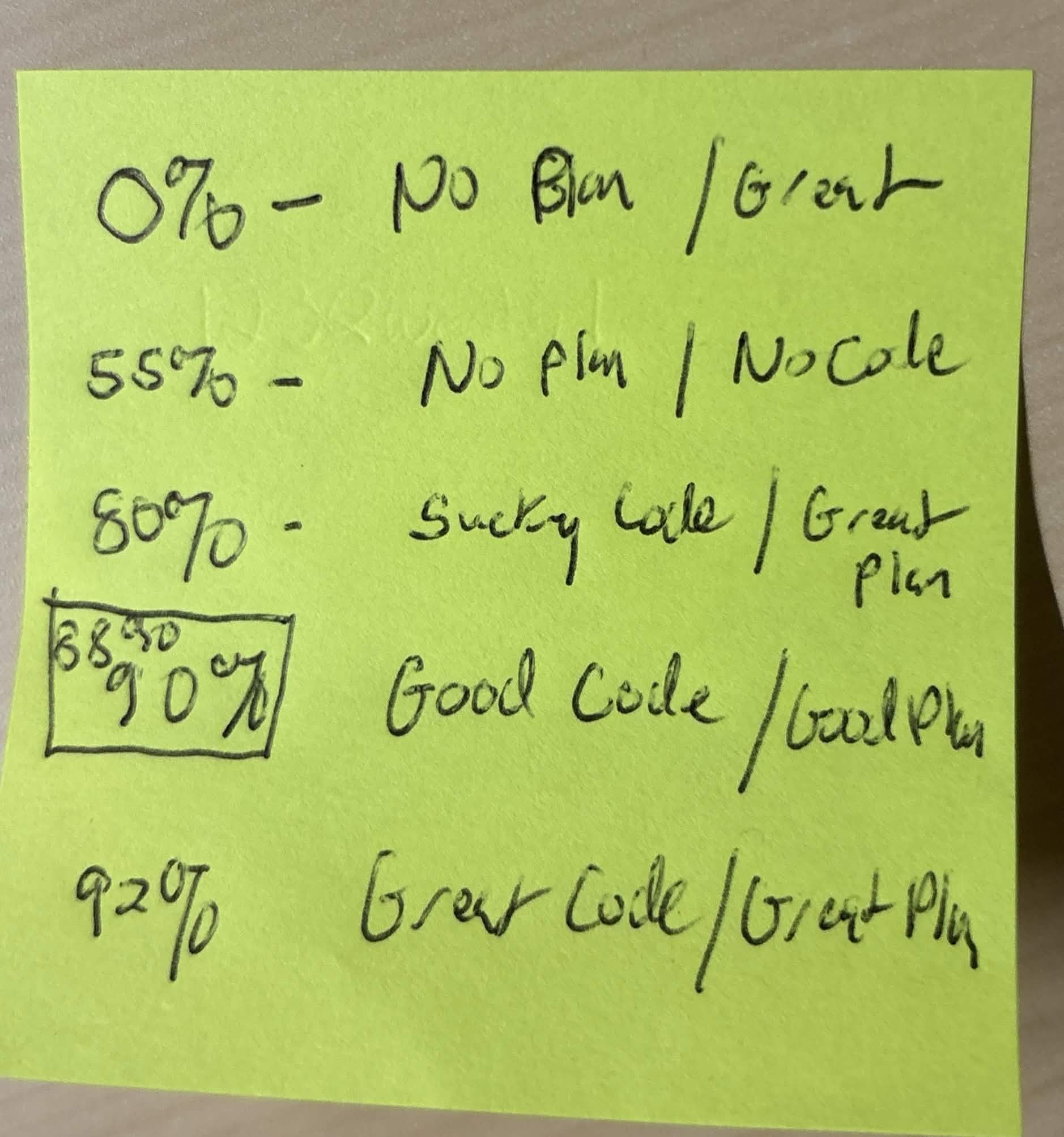
The plan is the permission matrix on the project page itself: who can do what, enforced server-side, re-checked at edit time, and covered by a concurrency test. Because both the plan and the shipped code are complete and documented, this sub-project is closer to Great Code / Great Plan than the Good/Good tier we're using as our floor.
Submission Analytics
The plan is the six analytics features scoped on the project page, split cleanly into what's live and what's tracked as open GitHub issues (API integration, heatmap caching, form validation, and more). Six of six features are already live, with the remaining work named and tracked rather than left vague — a documented plan is what keeps this at Good Code / Good Plan while those issues close out.
AI Grading
No code has been written yet, so the plan is doing all the work here: submission types, grading flow, and storage design are fully written out on the project page, and it's explicitly labeled a planning-stage proposal rather than something claiming to be further along than it is. That's the difference between landing at 0% (no plan) and having a real shot at Good Plan once the build catches up.